August 7, 2026

Soham Dasgupta
.svg)



"Sir, can I become an air hostess after completing Class 12?"
If you've landed on this page, chances are you've asked yourself this question at least once.
The good news is yes, you absolutely can.
Every year, we meet hundreds of students who dream of wearing a cabin crew uniform, travelling to different cities and countries, meeting new people and building a successful career in the aviation industry. But along with that dream comes a lot of confusion.
"Do I need to complete graduation first?"
"I'm from Commerce. Am I eligible?"
"My English isn't perfect. Can I still apply?"
"Is there any height requirement?"
"How much salary does an air hostess actually earn?"
If these questions are running through your mind, don't worry. You're asking the same questions that almost every aspiring cabin crew student asks during their first counselling session.
One thing I've noticed over the years is that many students think becoming an air hostess is all about looking good. It isn't.
Airlines are looking for people who can stay calm when things don't go as planned. They want candidates who can communicate confidently, work as part of a team, solve problems, and most importantly, make passengers feel safe and comfortable.
Yes, grooming and personality matter. But they're only one part of the picture.
I've also met students who almost gave up on their dream because someone told them they weren't "good enough" or their English wasn't fluent. A few months later, after regular communication practice, mock interviews and personality development sessions, some of those same students cleared airline interviews.
That's why I always tell students—don't decide your future based on what someone else says. Find out the facts first.
This guide is written to answer the questions students genuinely ask us every day. Whether you're from Arts, Commerce or Science, you'll get a clear understanding of how to start your aviation career after Class 12.
By the end of this guide, you'll know:
So let's begin with one of the biggest misconceptions about this profession.
Let's start with a simple question.
If I ask a classroom of students, "What does an air hostess do?", the most common answer is usually...
"They serve food on the flight."
It's not wrong.
But it's far from the complete picture.
In reality, serving meals is only one small part of the job.
The first responsibility of every air hostess is passenger safety.
Before passengers even step inside the aircraft, the cabin crew is already working. They check emergency equipment, make sure the cabin is ready for departure and attend a pre-flight briefing where they discuss important flight information.
Once boarding begins, they welcome passengers, help them find their seats, assist with cabin baggage and make sure everyone is comfortably seated before take-off.
During the flight, no two days are exactly the same.
One flight may be smooth and routine. Another may involve helping an elderly passenger, calming a nervous first-time flyer, assisting a family travelling with young children or responding to a medical emergency.
That's why airlines don't just recruit people with a pleasant smile. They recruit professionals who can stay calm under pressure and make quick decisions when required.
Some of the day-to-day responsibilities of an air hostess include:
One thing many students don't realise is that airlines invest a significant amount of time in safety training. Every cabin crew member is trained to handle emergency situations, evacuations, fire safety and passenger care.
So the next time someone tells you that an air hostess "only serves food," you'll know that's only a small part of a much bigger role.
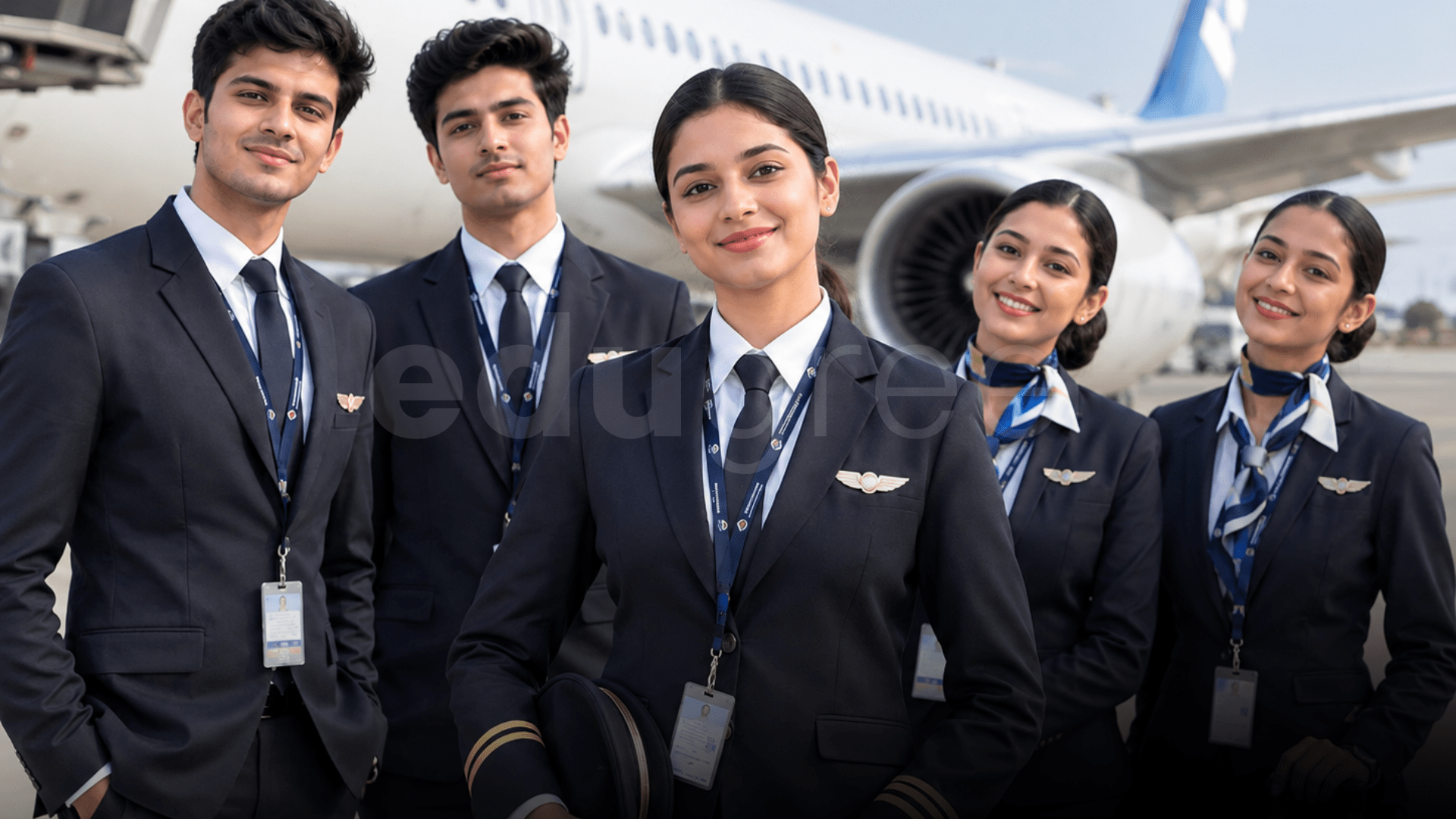
One mistake I see almost every year is that students spend hours practising their smile in front of the mirror but very little time improving their communication skills.
A smile helps.
Good grooming definitely helps.
But when you're sitting in front of an airline interviewer, they're also observing how you answer questions, whether you listen carefully, how confidently you speak and how you react when you're under pressure.
In my experience, communication and attitude usually leave a stronger impression than appearance alone.
Let's answer the question you're probably here for.
Yes, you can become an air hostess after completing Class 12.
You don't have to wait until graduation.
In fact, many students begin preparing for airline interviews immediately after finishing their higher secondary education.
Now let's clear another common misunderstanding.
Absolutely.
Airlines don't recruit candidates based on whether they studied Commerce, Arts or Science in school.
I've trained students from all three streams, and successful candidates have come from each of them.
Your stream is much less important than your communication skills, confidence, personality and willingness to learn.
Many Arts students worry that aviation is only for Science students.
That's simply not true.
If you've completed your Class 12 and meet the airline's eligibility criteria, you can absolutely pursue a career as an air hostess.
Of course.
Some Science students think choosing aviation means they've "wasted" their Science background.
Not at all.
If aviation excites you more than engineering or other career options, there's nothing stopping you from building a successful career in this industry.
This is another question we hear quite often.
A good academic record is always a positive thing.
However, airlines don't select candidates based only on marks.
They also evaluate:
I've seen students with average marks perform exceptionally well in airline interviews because they had worked hard on their communication and personality.
And I've also seen academically brilliant students struggle because they relied only on their marks.
That's why preparing yourself as a complete professional is so important.
Don't wait until you've finished your course to start improving yourself.
Start today.
Read English newspapers.
Watch airline interview videos.
Practise introducing yourself.
Speak confidently whenever you get an opportunity.
These may seem like small habits, but over a few months they make a remarkable difference.
Remember, confidence isn't something people are born with.
It's something they build through regular practice.
Now that you know you're eligible to become an air hostess after completingClass 12, the next question is...
"Where do I actually start?"
Many students think there's one shortcut that guarantees selection.
I wish there was.
The reality is a little different.
Most students who get selected don't do one extraordinary thing.
They simply prepare better than others.
Let's break the journey into simple steps.
Your journey begins after successfully completing your higher secondary education from a recognised board.
One thing I always tell students is not to worry too much about whether they studied Arts, Commerce or Science.
Airlines are not recruiting your school stream.
They're recruiting you.
They want to know:
Those qualities matter much more.
This is probably the biggest difference between students who clear airline interviews and those who don't.
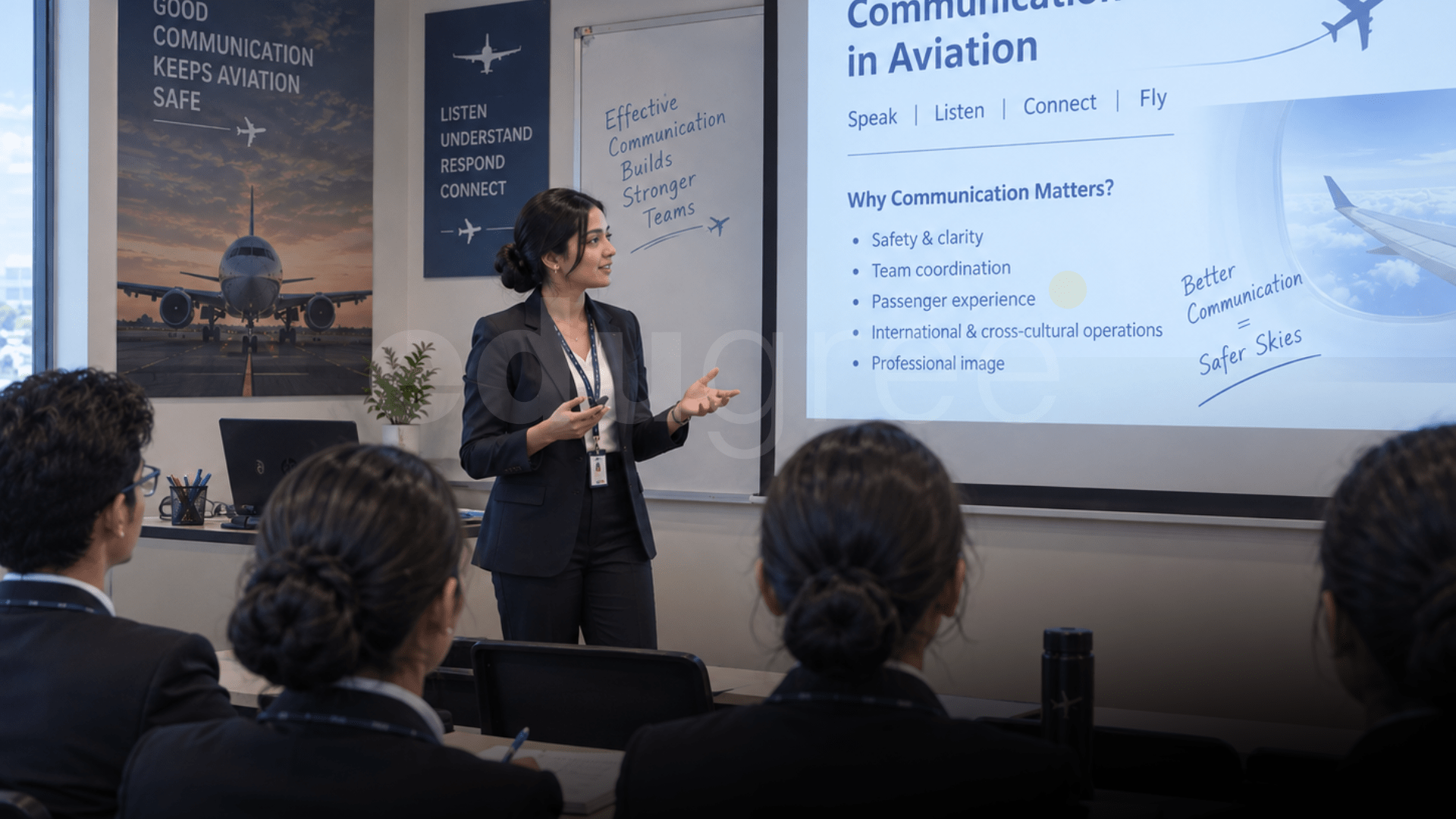
Notice I didn't say "Improve your English."
I said communication.
There's a difference.
I've met students who spoke fluent English but struggled during interviews because they sounded robotic.
I've also met students whose English wasn't perfect, but they smiled naturally, listened carefully and answered confidently.
Guess who got selected?
Communication is much more than vocabulary.
It's about connecting with people.
Start practising simple habits today.
Don't worry if you make mistakes.
Every confident speaker once sounded nervous.
If you're waiting until your aviation course starts before practising English, you're already losing valuable time.
Spend just 15–20 minutes every day speaking in English.
Consistency beats talent.
Can you prepare on your own?
Yes.
But joining a good aviation institute gives you structured guidance and practical exposure.
A quality training institute should help you develop both technical knowledge and professional skills.
Look for training that includes:
Aviation isn't just about learning theory.
It's about preparing for real airline interviews and understanding what the industry expects from you.
This is one step many students underestimate.
Personality isn't about being an extrovert.
It's about how you present yourself.
Can you maintain eye contact?
Do you smile naturally?
Are you polite?
Can you listen without interrupting?
Can you handle pressure without becoming defensive?
These small things create a big impression during interviews.
One confident sentence spoken naturally is often better than a memorised speech.
"Sir, I'm an introvert. Can I still become an air hostess?"
Absolutely.
Being introverted doesn't mean you can't communicate well.
Many successful cabin crew members are naturally quiet.
The difference is that they know how to communicate professionally when the situation demands it.
Confidence can be developed.
That's why practice matters so much.
Your resume creates the first impression before you even speak to the interviewer.
Keep it clean and professional.
Include:
Don't try to impress by writing things that aren't true.
Interviewers usually know when someone is exaggerating.
Honesty always works better.
Once your preparation is complete, start applying for airline recruitment drives.
Different airlines recruit at different times of the year.
Some conduct walk-in interviews while others invite shortlisted candidates after an online application.
Before applying, always check:
Every airline has its own recruitment process.
Never assume that all airlines follow exactly the same rules.
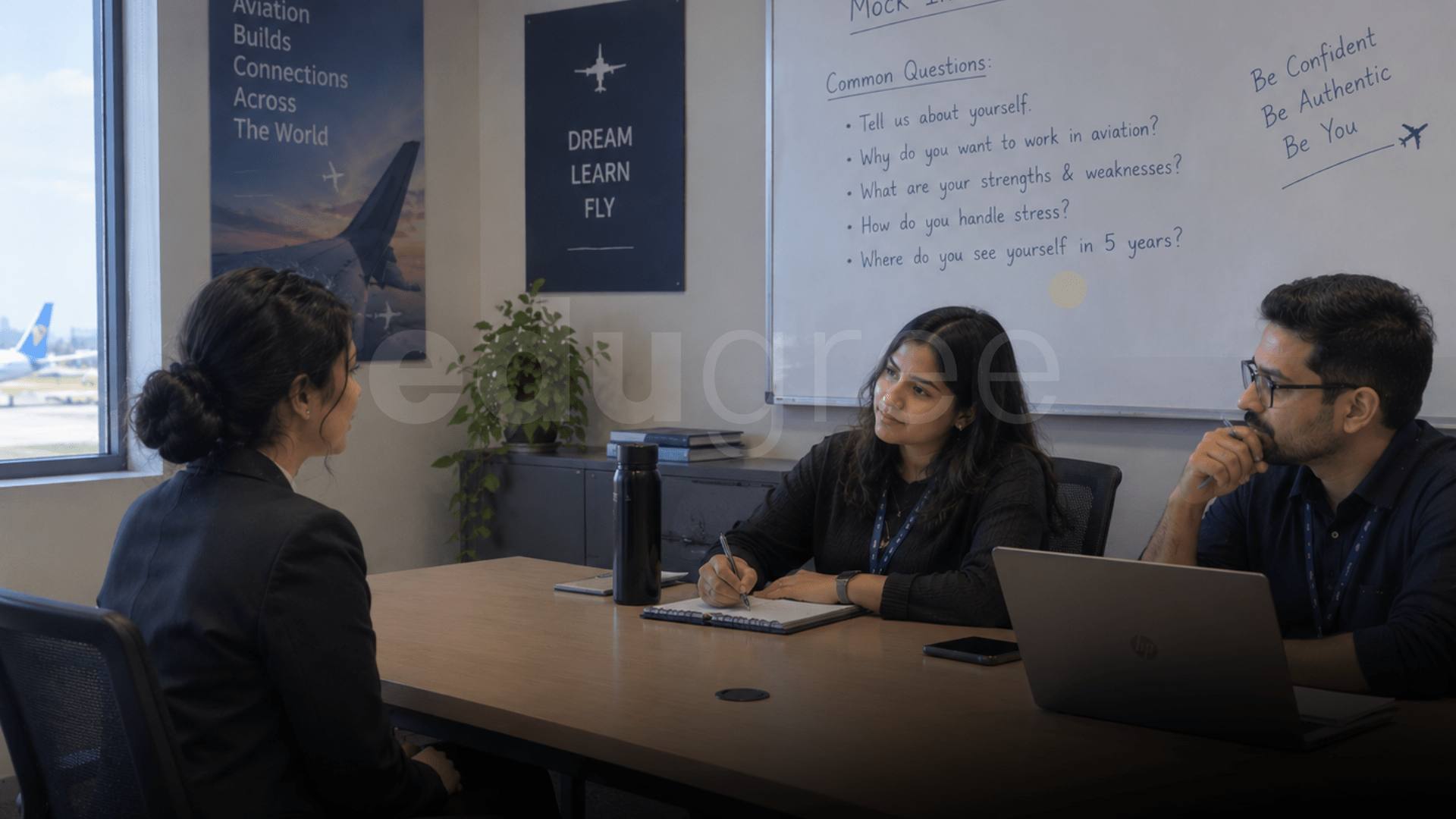
Most airlines follow multiple rounds of selection.
Although the exact process may vary, it generally includes:
Many students spend weeks preparing answers but forget to prepare themselves.
Remember, interviewers are observing you from the moment you enter the room.
How you greet people.
How you sit.
How you smile.
How you respond when you don't know an answer.
Everything matters.
Now let's answer another question that students ask almost every day.
"Sir, am I eligible?"
Let's go through the basic requirements one by one.
To begin your career as an air hostess, you should have completed Class 12 (Higher Secondary) from a recognised education board.
Students from Arts, Commerce and Science streams can all apply.
Some airlines may also recruit graduates for specific positions, but many cabin crew opportunities are available after Class 12.
Most airlines recruit candidates who have completed 18 years of age.
The upper age limit may vary depending on the airline and the recruitment drive.
Always read the official recruitment notification before applying because these requirements can change over time.
This is probably one of the most common questions students ask us.
"Sir, I'm not very tall. Can I still become an air hostess?"
The answer depends on the airline, but here's the good news—you don't need to be exceptionally tall.
For many airlines in India, female candidates are generally expected to have a minimum height of around 155 cm. However, this can vary slightly from one airline to another, so it's always a good idea to check the latest recruitment criteria before applying.
Height is only one part of the selection process. Airlines also assess whether you can comfortably reach the overhead safety equipment inside the aircraft. This is important because cabin crew members are responsible for handling emergency equipment whenever required.
One thing I always tell students is this:
Don't reject yourself before the airline does.
Every year, we meet students who assume they aren't eligible because of their height, without even checking the airline's official requirements.
If you're close to the general requirement, focus on improving your communication skills, grooming, confidence and interview preparation. Those qualities often make a much bigger difference during the selection process than students initially think.
Q: "Sir, I'm 154 cm tall. Should I give up on my dream?"
A: Not at all.
Different airlines may have different recruitment standards, and eligibility depends on several factors—not just height. If you're close to the general requirement, don't lose confidence before you've even applied. Improve the things that are in your control, such as communication, grooming and interview preparation, and always check the latest criteria of the airline you're interested in.
Cabin crew members play an important role in ensuring passenger safety, so good overall health is essential.
Airlines may conduct medical examinations during the recruitment process to ensure candidates meet their operational requirements.
If you have any medical concerns, it's always better to clarify them before applying.
If I had to choose one skill that can dramatically improve your chances during an airline interview, it would be communication.
Notice that I didn't say fluent English.
I said communication.
Speaking clearly.
Listening carefully.
Maintaining eye contact.
Showing confidence without sounding arrogant.
These are the qualities interviewers notice.
.webp)
The aviation industry has high standards of professional presentation.
This doesn't mean you need expensive clothes or professional makeup.
It means looking neat, well-groomed and presentable.
Simple things like clean shoes, tidy hair, proper posture and a pleasant smile create a positive first impression.
After training hundreds of aviation students, one lesson stands out.
The students who improve the most aren't always the most talented.
They're the ones who are willing to accept feedback.
They practise introductions again and again.
They improve their posture.
They work on eye contact.
They volunteer for mock interviews even when they're nervous.
Confidence isn't something you're born with.
It's something you build—one practice session at a time.
One of the biggest myths among students is that airlines only recruit candidates who are good-looking.
If that were true, airline interviews would be over in five minutes.
The reality is very different.
During recruitment, interviewers are trying to answer one simple question:
"Can we trust this person to represent our airline and take care of our passengers?"
That's why they're looking beyond appearance.
Let's understand the qualities that really matter.
If you've been reading this guide from the beginning, you've probably noticed that I keep talking about communication.
That's because it is probably the single most important skill in the aviation industry.
Think about it.
Every day, an air hostess interacts with hundreds of passengers.
Some passengers are excited.
Some are tired.
Some are nervous because it's their first flight.
Some may even be angry because their flight has been delayed.
Your job is to communicate with all of them in a calm, polite and professional manner.
And communication isn't just about speaking.
It also includes:
Passengers remember how you made them feel.
That's why airlines pay so much attention to communication during interviews.
One mistake I see quite often is students trying to use difficult English words just to impress the interviewer.
Don't.
Simple English spoken confidently is always better than complicated English spoken nervously.
Confidence is not about speaking loudly.
It's about believing in yourself.
Interviewers notice confidence from the moment you enter the room.
How you walk.
How you greet them.
How you sit.
How you smile.
Even how you react when you don't know an answer.
Here's something students find surprising.
Sometimes interviewers intentionally ask unexpected questions.
They're not always checking your answer.
They're checking your reaction.
Can you stay calm?
Can you think before speaking?
Can you remain polite under pressure?
These moments tell interviewers a lot about your personality.
"Sir, I get nervous during interviews. What should I do?"
First of all, that's completely normal.
Even experienced professionals get nervous before interviews.
The solution isn't to eliminate nervousness.
The solution is to practise so much that nervousness stops controlling you.
That's exactly why mock interviews are so valuable.
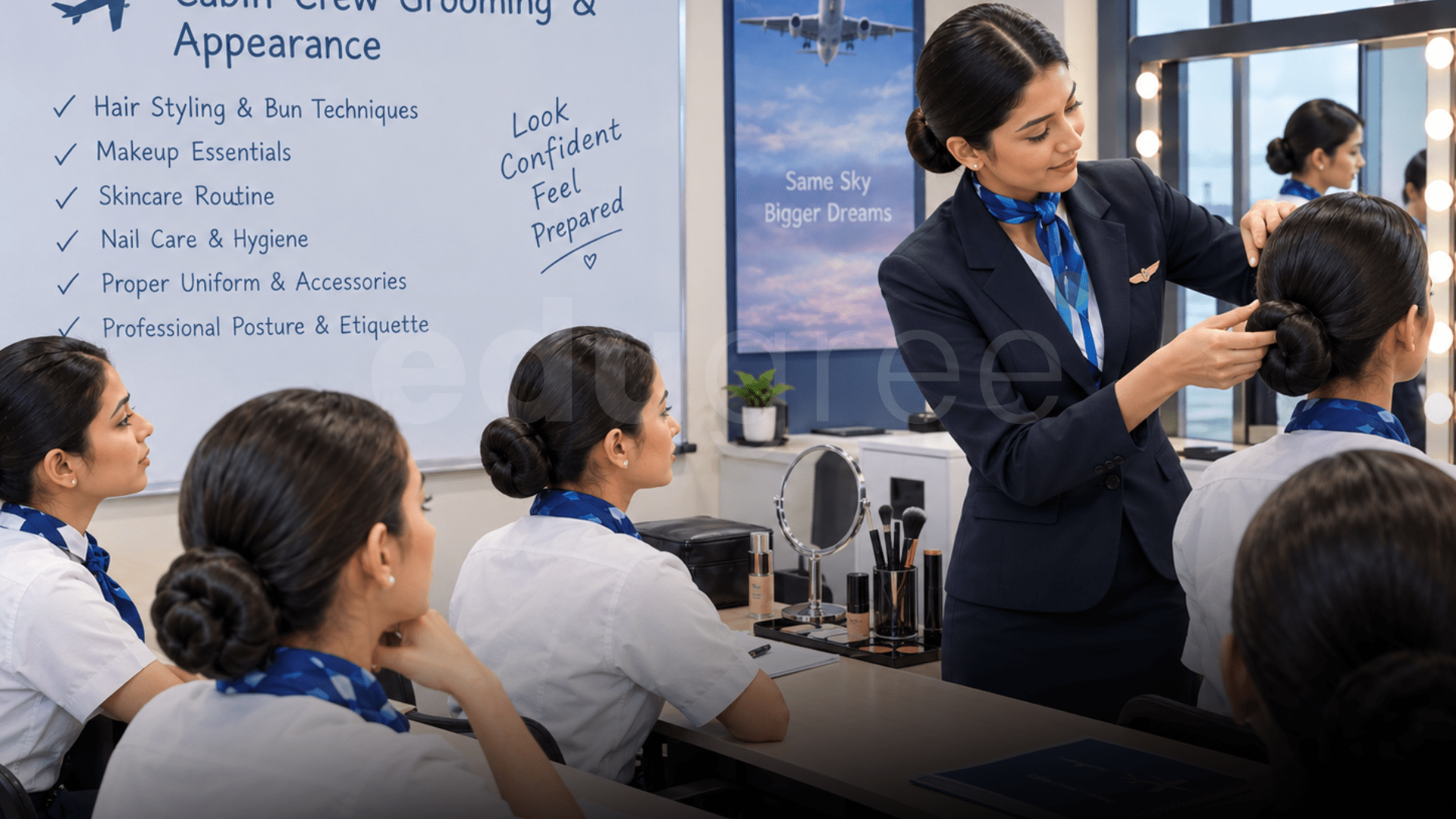
Let's clear another misconception.
Good grooming doesn't mean expensive makeup or branded clothes.
Professional grooming means looking neat, clean and well-presented.
Airlines expect cabin crew members to maintain a polished appearance because they represent the company's brand.
Basic grooming includes:
Small details often leave a lasting impression.
Imagine this situation.
A passenger misses a connecting flight because of bad weather.
They're upset.
Maybe even angry.
What should an air hostess do?
Argue?
Ignore them?
Definitely not.
A good cabin crew member listens patiently, understands the passenger's concern and responds professionally.
That's customer service.
You're not just serving meals.
You're solving problems.
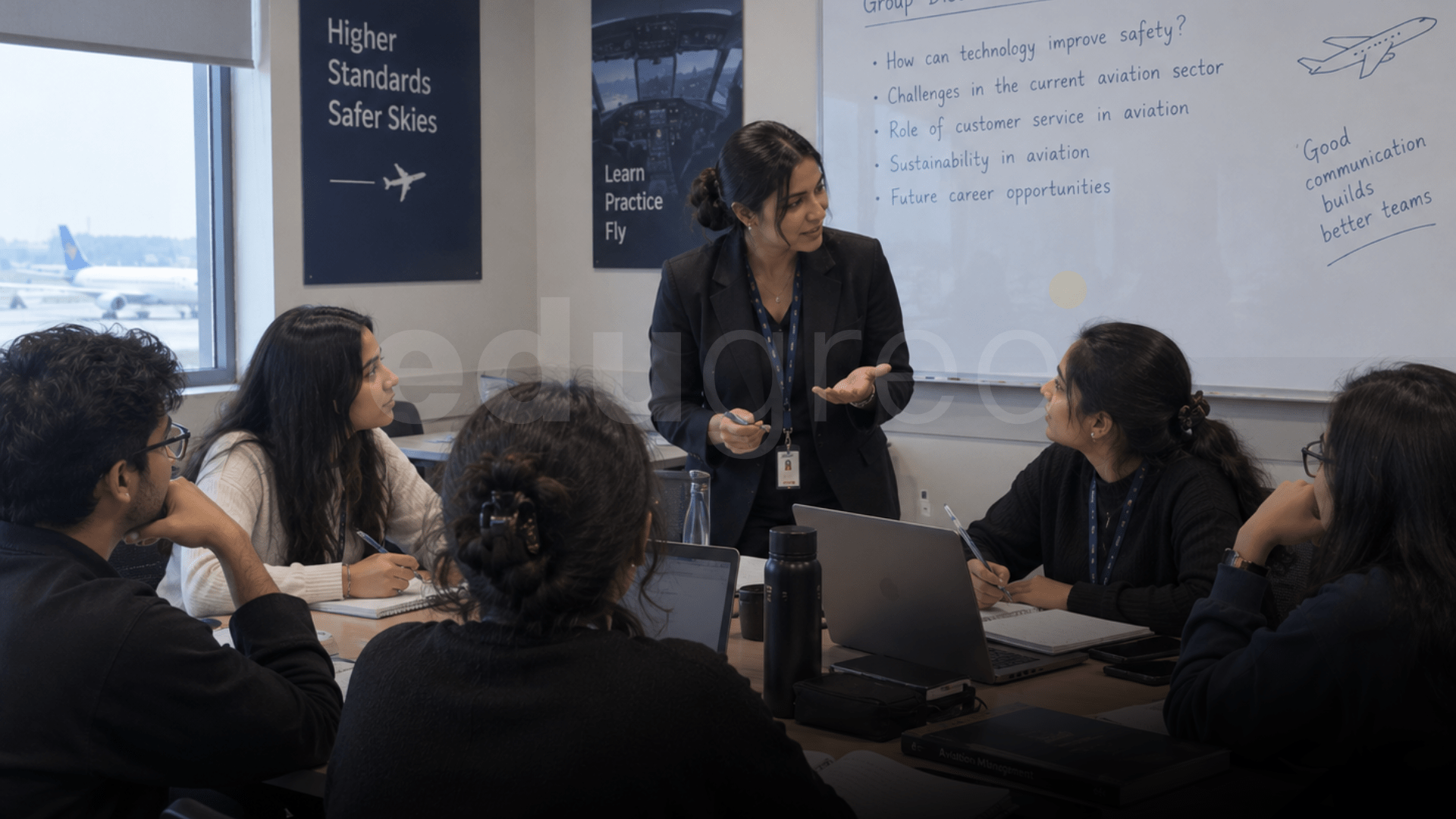
A flight cannot operate successfully if every crew member works independently.
Cabin crew members work closely with:
Sometimes you'll need to help a colleague without being asked.
Sometimes your colleague will help you.
That's how aviation works.
Students often tell me,
"Sir, I prefer working alone."
That's perfectly fine in many professions.
But aviation is different.
Inside an aircraft, teamwork isn't optional.
Passengers don't see individual crew members.
They see one team.
Not every flight goes exactly as planned.
A child may suddenly become unwell.
A passenger may lose important documents.
Weather conditions may change.
Cabin crew members are trained to think calmly and respond professionally.
Interviewers often ask situation-based questions because they want to understand how you think.
There isn't always one perfect answer.
They're looking at your approach.
This quality is difficult to teach.
But it's easy to notice.
Passengers enjoy interacting with crew members who are approachable, polite and genuinely helpful.
A positive attitude creates a better travel experience.
And yes...
Interviewers notice it too.
Many students think aviation training is only about learning airport terminology.
It's much more practical than that.
A good aviation course prepares you for the real world.
During your training, you'll usually learn topics such as:
You'll understand how flights operate, the responsibilities of cabin crew and the professional standards expected by airlines.
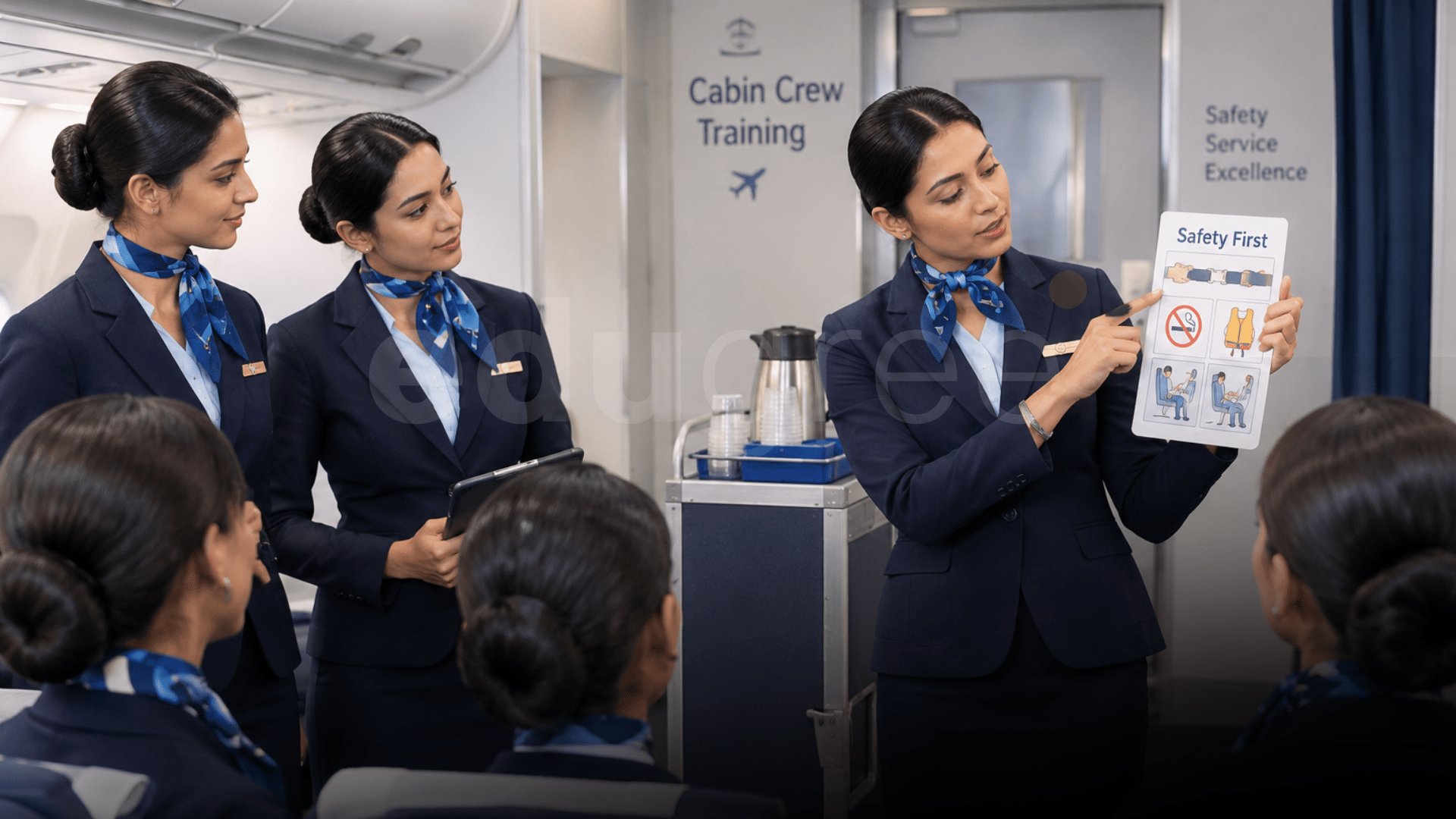
Safety is the foundation of aviation.
Students learn about:
This isn't just English speaking.
It includes:
Students learn:
Professional grooming sessions usually cover:
Airlines are service-based organisations.
Students learn:
.webp)
Students often ask us,
"What actually happens during training?"
So here's a small glimpse.
At Edugree, we believe students learn best by doing—not just by listening.
That's why our focus is on practical learning.
Training includes:
One thing we encourage every student to do is speak.
Even if your English isn't perfect.
Because confidence improves only when you use it.
We've seen students who were afraid to introduce themselves on the first day confidently answer interview questions after a few months of consistent practice.
That's one of the most rewarding parts of training.
"Sir, my English is average. Should I join after improving it?"
No.
Join first.
Improve while learning.
Waiting until you're "perfect" usually means you never start.
Most students improve their communication during training because they're practising every day.
Let's look at a few questions that almost every airline asks in some form.
This isn't your life story.
Interviewers want a confident introduction that highlights your education, communication skills and interest in aviation.
Avoid answers like:
"Because I want to travel."
Travelling is one benefit of the job.
Instead, talk about:
Focus on your strengths.
Communication.
Positive attitude.
Teamwork.
Willingness to learn.
Professionalism.
The interviewer isn't expecting a dramatic story.
Even a simple example from school, college or daily life can demonstrate problem-solving and maturity.
Never memorise interview answers word for word.
The moment you forget one sentence, you'll panic.
Instead...
Understand the idea.
Then answer naturally in your own words.
Natural answers always sound more confident.
Let's be honest.
One of the first questions students ask is,
"Sir, how much salary will I get?"
There's nothing wrong with asking this.
After all, you're investing your time, money and effort into building a career. It's natural to want to know what kind of income you can expect.
The answer, however, isn't as simple as one fixed number.
An air hostess's salary depends on several factors, including:
That's why two cabin crew members with the same qualification can have very different salaries.
If you're just starting your career with a domestic airline, your salary package will generally include a basic salary along with various allowances.
Many freshers in India earn approximately ₹30,000 to ₹60,000 per month, depending on the airline and the overall compensation structure.
As you gain experience and take on more responsibilities, your earnings can increase significantly.
One of the biggest advantages of the aviation industry is that growth can be relatively fast if you perform well.
With a few years of experience, many cabin crew professionals move into senior positions and may receive higher salaries, additional allowances and greater responsibilities.
Some experienced cabin crew members working with leading airlines earn ₹70,000 to ₹1,50,000 per month or even more, depending on the airline and their role.
Working for an international airline is a dream for many aspiring cabin crew members.
Apart from higher salaries, international airlines may also offer additional benefits such as:
The selection process for international airlines is often more competitive, which is why strong communication skills and professional training become even more important.
Many students focus only on the monthly salary.
I encourage them to look at the complete package.
Depending on the airline, cabin crew members may receive benefits such as:
Sometimes these benefits add considerable value beyond the basic salary.
Don't choose an airline only because someone told you it pays the highest salary.
Instead, ask yourself:
The first job is often the beginning of your journey—not the final destination.
One thing I love about the aviation industry is that it offers clear opportunities for growth.
You don't remain in the same role forever.
As you gain experience and develop professionally, new opportunities open up.
A typical career path may look something like this:
↓
↓
↓
↓
↓
↓
Some professionals also move into airport operations, customer service management, hospitality training or aviation education after gaining industry experience.
In other words, becoming an air hostess can be the beginning of a long and rewarding career—not just a job.
"Sir, can I continue this career for many years?"
Absolutely.
Many people assume that cabin crew is only a short-term career.
In reality, experienced professionals often move into senior cabin crew positions, training departments, recruitment teams or managerial roles.
Your career doesn't stop after a few years—it simply evolves.
Many students imagine that every day in aviation feels like a holiday.
The truth is... it's exciting, but it's also a profession that requires discipline.
Let's walk through what a typical day might look like.
Your day usually begins well before passengers arrive at the airport.
Cabin crew members report for duty, attend a briefing with the flight crew and receive important information about the flight.
This may include:
.webp)
Before boarding begins, cabin crew members inspect the aircraft cabin and check emergency equipment.
Everything must be ready before passengers enter the aircraft.
Safety always comes first.
This is where your communication skills come into play.
You'll welcome passengers with a smile, help them locate their seats, assist with cabin baggage and answer questions.
Sometimes you'll meet passengers who are excited.
Sometimes you'll meet passengers who are anxious because it's their first flight.
Every passenger is different.
Once the aircraft is in the air, your responsibilities continue.
Depending on the flight, you may:
No two flights are exactly alike, and that's one of the reasons many people enjoy this profession.
After landing, cabin crew members assist passengers during disembarkation and ensure the cabin is safely cleared.
Depending on the schedule, you may prepare for another flight or complete post-flight duties.
Some days are busy.
Some days are relatively relaxed.
That's the nature of the aviation industry.
Students often tell me,
"Sir, this job looks glamorous."
And yes, it certainly has its glamorous moments.
But what people don't always see is the discipline behind it.
Early morning reporting.
Late-night flights.
Standing for long hours.
Handling demanding passengers with a smile.
Cabin crew professionals earn respect because they perform these responsibilities with professionalism every single day.
Let's clear up some of the misconceptions that continue to confuse students.
Reality:
Professional appearance is important, but airlines don't recruit candidates based only on beauty.
Communication, confidence, grooming, customer service skills and professionalism matter much more.
Reality:
No.
Airlines expect clear and confident communication.
Nobody expects you to speak like a news anchor.
In fact, speaking naturally is often better than trying to sound overly polished.
Reality:
Students from Arts, Commerce and Science streams can all pursue a career as an air hostess, provided they meet the airline's eligibility criteria.
Reality:
Passenger safety is the primary responsibility of every cabin crew member.
Meal service is just one part of the overall role.
Reality:
Many airlines in India generally expect female candidates to have a minimum height of around 155 cm, but requirements vary.
Height is only one part of the recruitment process.
Communication, confidence and overall suitability also play an important role.
If you've noticed one topic appearing throughout this guide, it'scommunication.
That's not by accident.
Communication is at the heart of almost everything an air hostess does.
You'll speak with passengers from different cities, cultures and age groups.
You'll work with pilots, airport staff and fellow cabin crew.
You'll explain safety procedures, answer questions, handle complaints andreassure nervous travellers.
In short, your ability to communicate can influence the passenger's entiretravel experience.
That's why communication training should never be treated as an"extra" subject.
It's one of the core skills that every aspiring cabin crew member shouldcontinuously improve.
If you've read this far, you've probably realised something.
Becoming an air hostess isn't about looking perfect.
It's about becoming professional.
Professional in the way you communicate.
Professional in the way you solve problems.
Professional in the way you treat people.
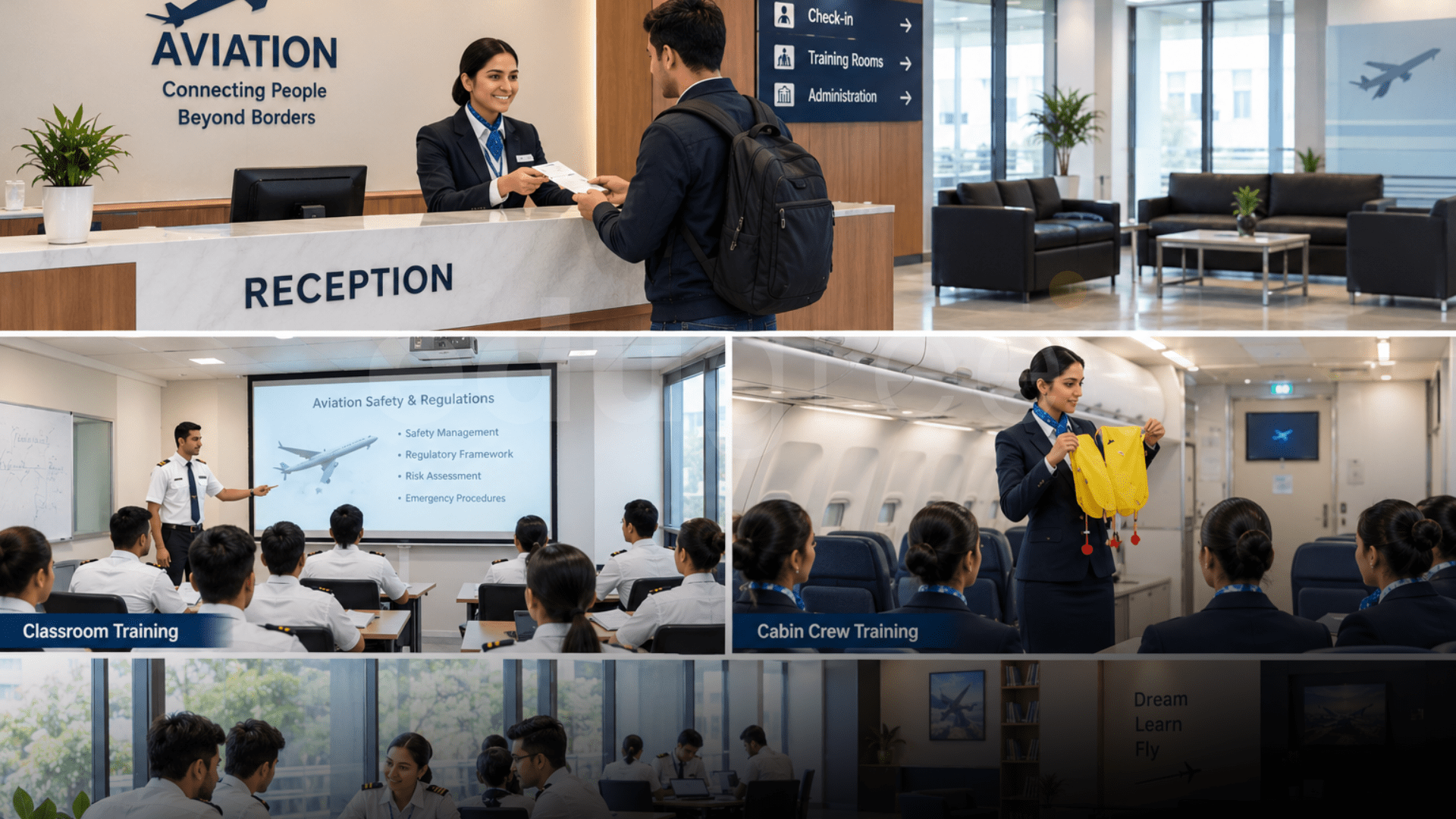
Choosing an aviation institute isn't just about finding the nearest one.
It's about choosing a place where you'll develop the skills that airlines are actually looking for.
At Edugree, our focus goes beyond classroom lectures.
We believe students learn best when they practise.
That's why our training includes regular communication sessions, personality development, grooming workshops, mock interviews and confidence-building activities.
Instead of only teaching students what happens during an airline interview, we help them experience it through practical sessions.
Students also receive guidance in areas such as:
Our aim is simple.
To help students become industry-ready and walk into an airline interview with confidence
📍 Edugree – Aviation, Hospitality &Professional Skills Training
📞 Phone: 8001554321
If you'd like to know more about our aviation courses, fee structure,training facilities or admission process, feel free to get in touch with ourteam. We'd be happy to answer your questions and guide you towards the coursethat best matches your career goals.
If you've read this guide from beginning to end, I'd like to leave you withone final thought.
Every year, I meet students who say,
"Sir, I don't think I'm good enough."
Sometimes it's because of their English.
Sometimes it's because of their confidence.
Sometimes it's because someone told them aviation isn't for them.
And almost every year, I see a few of those same students transform throughconsistent effort and practice.
That's why I believe success in aviation isn't reserved for the mosttalented students.
It's usually achieved by the students who are willing to learn, practise,accept feedback and keep improving.
So if becoming an air hostess is your dream, don't let fear decide yourfuture.
Prepare well.
Keep learning.
Believe in yourself.
Then give your best when the opportunity comes.
You might surprise yourself.
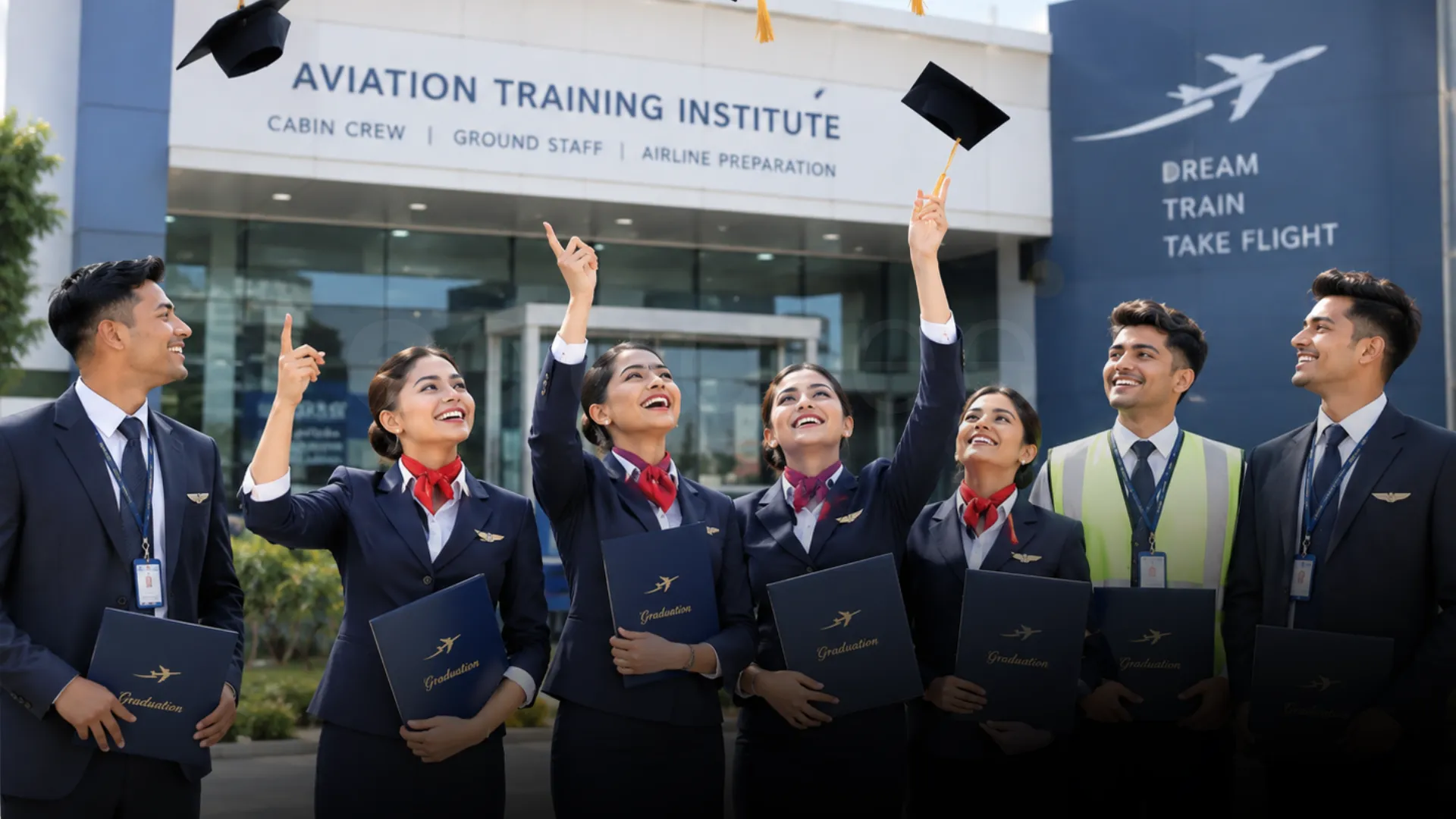
Every student's journey is different, and KrinjalChettri's story is a great example of what consistent effort can achieve.
Krinjal is from the Dooars region and completed herClass 12 from St. James School, Binnaguri. Like many studentswho dream of joining the aviation industry, she had questions about her communicationskills, interview preparation and whether she would be able to compete withcandidates from bigger cities.
During her training at Edugree, she focused on improvingher communication, personality, grooming and interview skills. She participatedin mock interviews, accepted feedback positively and kept working on herselfstep by step.
Her dedication paid off.
Today, Krinjal is proudly working as a CabinCrew with IndiGo, proving that with the right guidance, regularpractice and determination, students from any background can build a successfulcareer in aviation.
We are proud to be a part of her journey and wish her continued success asshe flies towards an even brighter future.
Dreams don't have a postcode, and Pushpanjali Gurung'sjourney is a wonderful reminder of that.
Pushpanjali belongs to Sikkim andcompleted her schooling at Prashanti Vidya Mandir School, Gangtok.She always wanted to build a career in aviation but knew that success wouldrequire more than just a dream—it would require preparation, confidence andperseverance.
During her training, she worked consistently on hercommunication skills, professional grooming and interview techniques. Withevery mock interview and practical session, her confidence continued to grow.
Her hard work eventually led to a proud milestone.
Today, Pushpanjali is flying as a Cabin Crewwith IndiGo. Her journey inspires many young students from Sikkim andthe North East to believe that with dedication and the right training, a careerin the aviation industry is well within reach.
We congratulate Pushpanjali on her achievement and look forward to seeingher continue to grow in her aviation career.
Becoming an air hostess after Class 12 is more than choosing aprofession—it's choosing a career that combines responsibility, professionalismand the opportunity to interact with people from different backgrounds everyday.
Like any worthwhile career, it requires preparation. You'll need to work onyour communication skills, confidence, grooming and customer service abilities.The good news is that these are skills that can be learned and improved withregular practice.
If you're serious about joining the aviation industry, start preparing todayrather than waiting for the "perfect" time. Read, practise, askquestions, attend mock interviews and keep improving step by step.
Remember, every experienced cabin crew member was once a beginner whodecided to take the first step.
We hope this guide has helped you understand what it takes to become an airhostess and given you the confidence to begin your journey.
You may also find these guides helpful:
.png)


